

Food Processing Containers
Sæplast insights · Food processing
Food Processing Containers: From Ingredients to the Next Batch
A well-run production line starts before the ingredients reach the machine.
The right batch needs to arrive in the right condition, clearly identified and ready for the next step. The container carrying it needs to fit the process just as well.
From bakery ingredients and dairy products to vegetables and prepared foods, this guide looks at the everyday decisions that connect container selection, production flow and food safety.

What are food processing containers used for?
Food processing containers hold and move ingredients, intermediate products and finished food between operations. Their role may include collecting a measured batch, supplying a mixer, holding work in progress or transferring material to another area.
A container is therefore part of a sequence. It is filled, identified, moved, emptied, cleaned, checked and returned. Choosing it around only one of those tasks can create difficulties elsewhere.
Sæplast supplies reusable containers and handling products for food processing. The practical starting point is to define the sequence your equipment must support.
Choose around the ingredient, not just the volume
Capacity is only one part of the specification. Powders, delicate pieces, wet ingredients and thick mixtures behave differently during filling and discharge.
Describe the actual product to your supplier. Include its temperature, expected contact time and whether it is dry, fatty, acidic, liquid or viscous. Ask for the food-contact documentation and operating limits applicable to the selected model and accessories.
- Dry ingredients: consider dust, moisture exposure, identification and access for the approved cleaning method.
- Fragile products: assess fill depth, transfer height and the risk of damage during handling.
- Wet or sticky ingredients: examine discharge behaviour and access to surfaces that can retain residue.
- Temperature-sensitive food: match the container to the established holding, transport or cooling process.
Also distinguish nominal volume from a practical working load. The density of the contents, required headspace and handling equipment all influence the amount that can be moved appropriately.
Make ingredient staging part of production planning
Staging means getting ingredients ready before a production step begins. Done well, it gives operators a clear view of what is available and which batch each container belongs to.
Set a defined location for prepared batches and identify their status. Product awaiting a quality decision should be distinguishable from product released for use. Keep the rules understandable across shifts.
A useful exercise is to follow a batch when production is delayed. Can another operator identify its contents, find the associated record and determine the next permitted action without relying on a verbal handover?
That is where straightforward identification and a planned holding location can make a practical difference.
Reduce unnecessary transfers between containers
Each additional transfer requires time, equipment and a new handling step. Review where product is moved simply because the original container does not fit the next operation.
Consider whether a suitable container can serve more than one stage, such as weighing and delivery to a mixing area. Any change still needs to respect hygiene zoning, allergen separation and the process requirements.
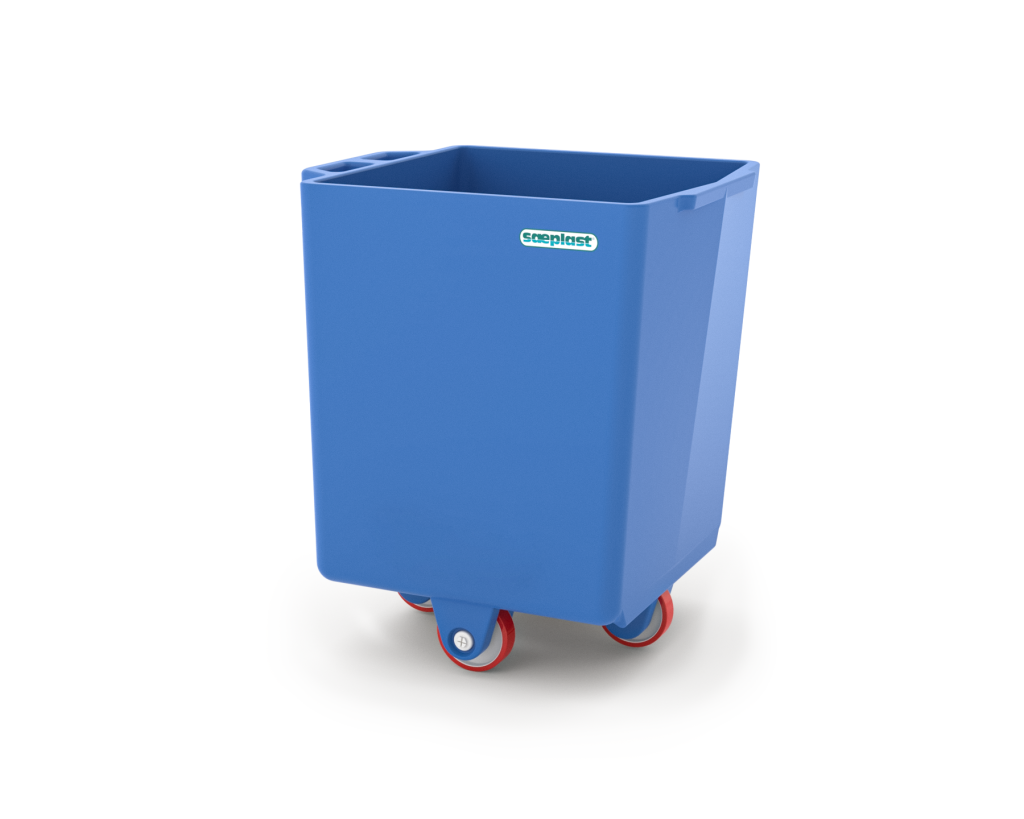
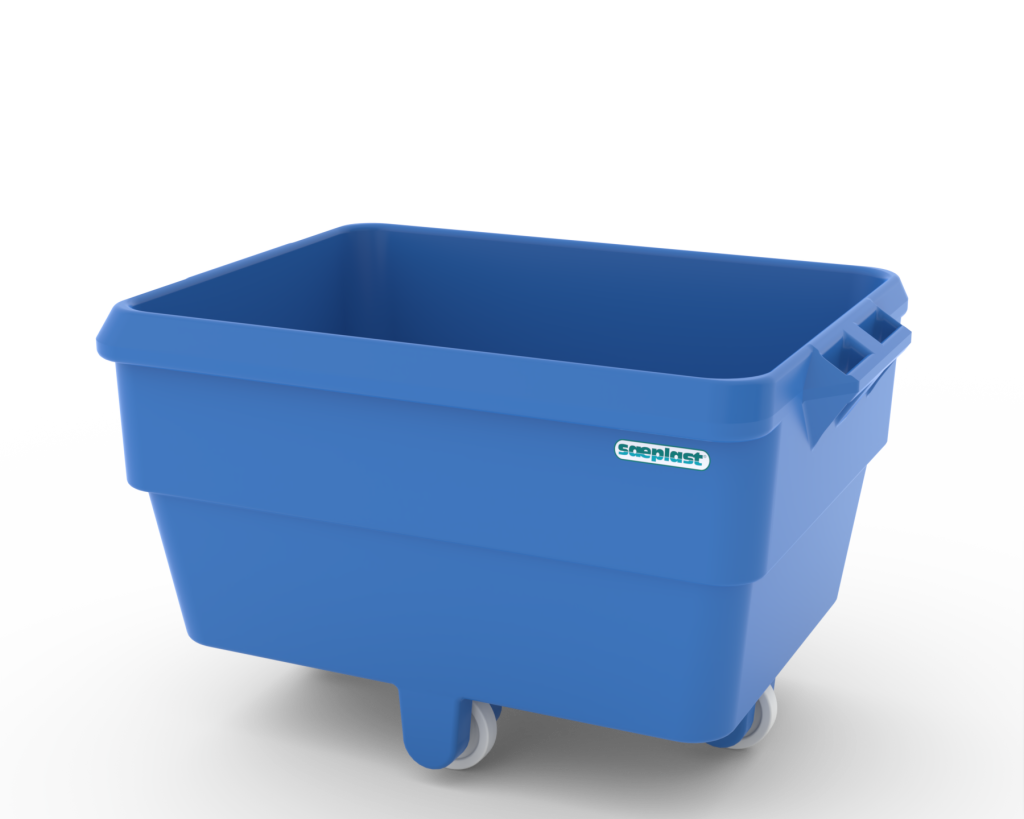
For wheeled buggies, inspect the actual route, including gradients, thresholds and turning space. For mechanically handled containers, confirm lifting interfaces, load limits and clearance with the equipment suppliers.
Similar dimensions are not proof that a container fits a tipper. Confirm the exact model and configuration before use.
Treat the next recipe as a new set of requirements
A production changeover can alter the ingredient mix, allergen profile, handling conditions and required identification. A container that is empty is not automatically ready for the next recipe.
Define which containers and accessories stay dedicated to a product or area and which may be shared. For shared equipment, establish an appropriate cleaning process and validate allergen removal for the relevant product, residue and equipment combination.
Colour can help staff recognise a designated use, but it needs to be supported by labels, training and consistent rules. Include lids and utensils in those arrangements.
Before the next batch starts, check that obsolete labels and remaining ingredients from the previous run have been dealt with under the changeover procedure. The Codex code on food allergen management provides a framework for these controls.
Plan cleaning around the residue and the environment
The cleaning method needs to suit both the material being removed and the production environment. A method appropriate for a wet processing area may be unsuitable for a dry ingredient area.
Review the complete configuration, including rims, lids, outlets and removable fittings. Ask whether staff can reach and inspect the relevant surfaces using the proposed procedure. Confirm compatibility with the container supplier’s guidance.
Cleaning removes soil and residues. Disinfection targets microorganisms on suitably cleaned surfaces. A disinfectant should not be assumed to remove allergenic residues.
Define how effectiveness will be checked and what happens when a check fails. Visual inspection is useful, but the food-safety team should determine any additional verification needed. See the FAO guidance on cleaning and disinfection.
For liquid ingredients, pay attention to the outlet
Liquid and viscous ingredients introduce another selection question: how will the container empty into the receiving process?
Assess flow behaviour, connection arrangements and the accessibility of the outlet for cleaning. Thick mixtures may behave differently at different temperatures, so use representative conditions when evaluating discharge.
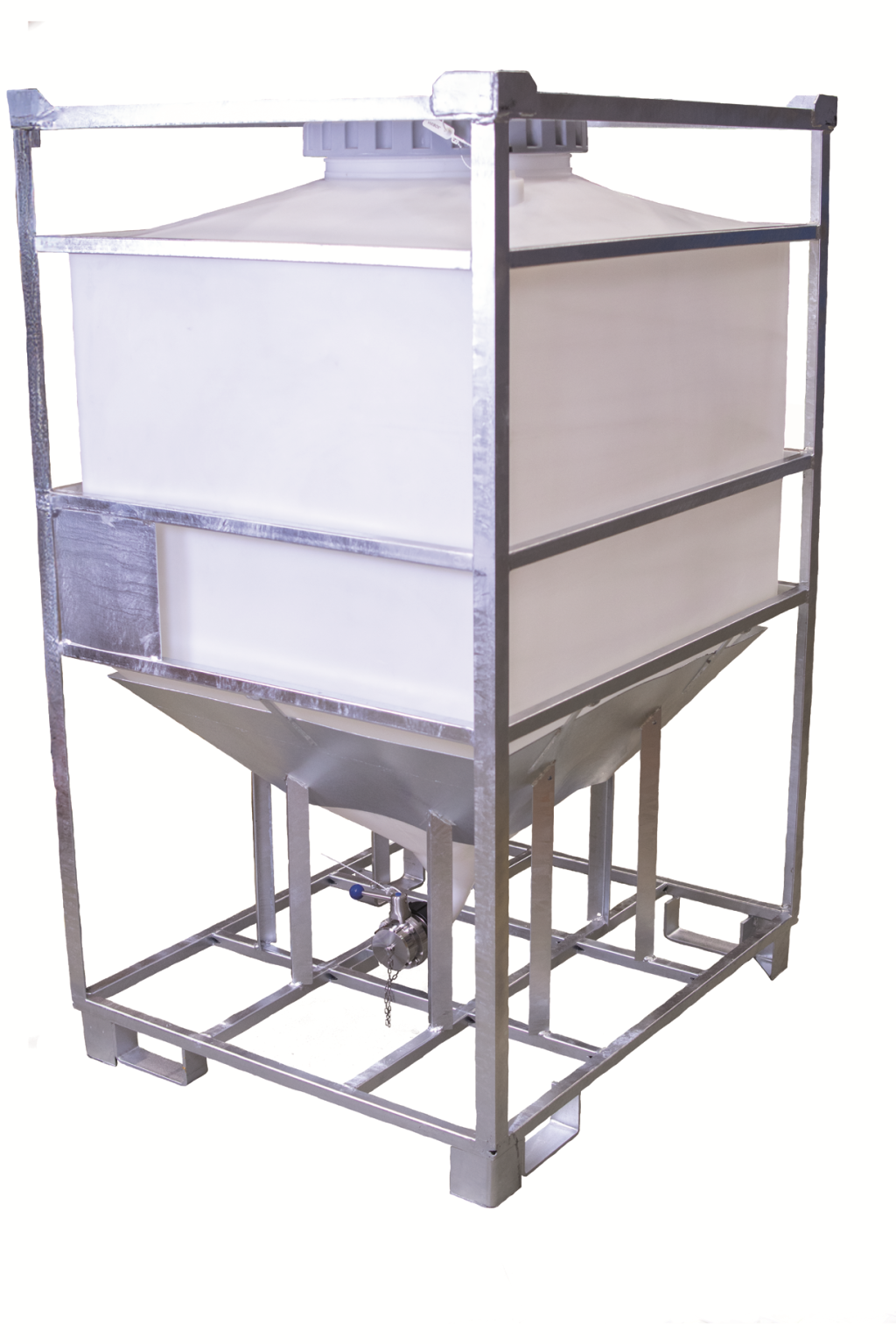
Sæplast’s Transport Silo TS100-01 is designed for storing and handling liquid ingredients and viscous materials. Its conical outlet and valve offer a different discharge arrangement from an open-top tub. Confirm suitability for your particular food and cleaning method with the supplier.
Decide what happens when the line stops
Short interruptions are part of production. The question is whether the batch remains under control while it waits.
Establish where it may be held, how it is protected, which time and temperature limits apply and who decides whether it can proceed. Keep those decisions linked to the batch record.
Insulated containers can slow heat transfer, but they do not actively refrigerate food. Insulation may also be unsuitable for a stage that requires rapid cooling. Evaluate performance in the actual process rather than assuming that an insulated container provides the right conditions for every step.
A general buying guide cannot set safe holding limits for every food. Use the limits and corrective actions established by your food-safety team for the product and applicable requirements.
Keep rework visible and controlled
Rework can be useful material for a later production run, but it needs a defined identity and destination. “Left over” is not enough information for the next shift.
Record the product, original batch, relevant ingredient and allergen information, quantity and status. Establish which recipes may receive it and under what conditions.
When rework enters a new batch, retain the connection between the two records. A container number, barcode or RFID tag can support identification, but the operating system must record what occupies that container at the time.
The same principle applies after emptying: remove outdated identification before assigning the container to another product.
Count containers through the whole cycle
Fleet requirements extend beyond the number needed beside the line. Some containers will be holding product, awaiting washing, drying, undergoing inspection or reserved for specific uses.
Map those stages before choosing a fleet size. If clean containers are repeatedly unavailable at the start of a run, investigate whether the constraint is washing capacity, storage, return time or the number of suitable containers.
Include routine condition checks. Remove containers with damage that could compromise their intended use, and follow an assessment and release process before any repaired equipment returns to production.
The objective is dependable availability of suitable, released equipment throughout the shift.
A practical checklist before you choose
Bring production, hygiene, quality and maintenance teams into the evaluation. Trial the proposed container through filling, movement, discharge, cleaning and return.
- Confirm food-contact suitability for the product and intended conditions.
- Check working capacity, loaded weight and equipment compatibility.
- Observe discharge and identify areas that retain product.
- Review cleaning access and the agreed verification method.
- Test identification and changeover arrangements across shifts.
- Confirm holding conditions, storage space and the return route.
Use the findings to write a clear purchasing specification. The strongest choice is the one that works throughout your actual process.
Equipment supports food safety through correct selection and use. Container design works alongside good hygiene practices, hazard analysis, training and documented operating procedures. It does not provide a standalone guarantee of food safety.
Your questions answered
Frequently Asked Questions About Food Processing Containers
Which container is best for food processing?
The appropriate choice depends on the ingredient, working load, contact conditions, movement and cleaning process. Compare the complete operating cycle and confirm the specific model’s suitability with the supplier.
Can one container be used for several recipes?
Potentially, if the intended uses are suitable and the facility has defined the necessary cleaning, allergen controls and release procedures. Some products or areas may require dedicated equipment.
Are wheeled buggies suitable for ingredient handling?
They can be useful for movements between workstations. Assess the actual route, loaded weight and receiving equipment, and select a model with the appropriate configuration.
What should I consider for liquid or viscous ingredients?
Review discharge behaviour, outlet design, connections, cleaning access and compatibility with the product. Evaluate the proposed arrangement under representative operating conditions.
Does colour coding replace allergen cleaning?
No. Colour coding is a visual aid. Allergen control also requires appropriate segregation, cleaning, identification and staff procedures.
Do insulated containers cool ingredients?
No. They slow heat transfer. Any required cooling or refrigeration must be provided by a suitable process and verified against the product’s requirements.
How should rework be identified?
Keep a record of its source batch, product, relevant allergen information, quantity and status. Record its use in subsequent batches and follow the facility’s defined rework rules.
How can I check that a container fits our production line?
Run a controlled trial with production, hygiene, quality and maintenance staff. Confirm handling compatibility, emptying, cleaning, identification and return to service before wider adoption.
Tell us how your ingredients move
Share your product, batch size, handling equipment and cleaning requirements. Sæplast can help you compare containers, buggies and other handling options for your food-processing operation.
More Like This:

Waste & Recycling Containers: Industry Guide
Food processors around the world are under pressure to improve safety, reduce waste, streamline operations, and deliver consistent quality. Saeplast helps them do that with durable, hygienic, reusable material-handling solutions designed for the realities of food production.
Pet Food Processing Containers: Handling Guide
Food processors around the world are under pressure to improve safety, reduce waste, streamline operations, and deliver consistent quality. Saeplast helps them do that with durable, hygienic, reusable material-handling solutions designed for the realities of food production.
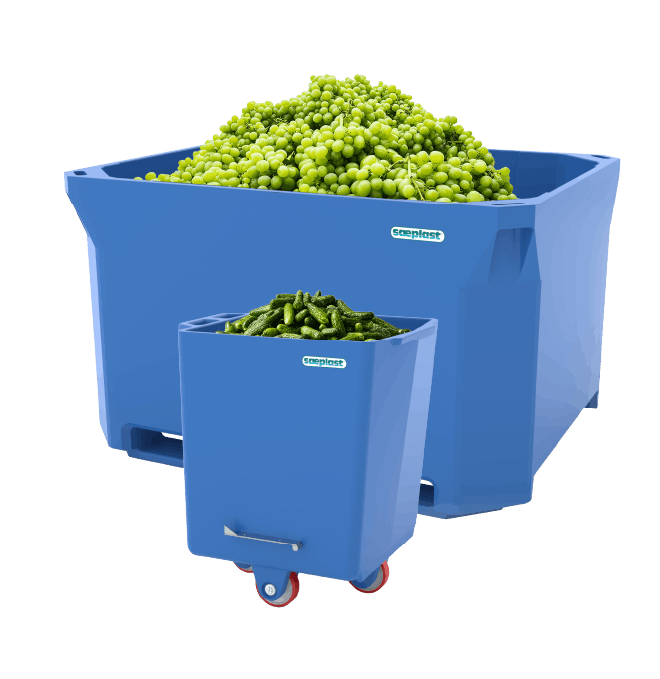
Food Processing Containers: Ingredient Handling
Food processors around the world are under pressure to improve safety, reduce waste, streamline operations, and deliver consistent quality. Saeplast helps them do that with durable, hygienic, reusable material-handling solutions designed for the realities of food production.