



PPWR

PPWR readiness starts with your handling fleet
A practical guide for procurement, operations, quality, logistics and sustainability teams reviewing bulk packaging, reusable containers and material handling systems ahead of the new EU Packaging & Packaging Waste Regulation.
The new Packaging & Packaging Waste Regulation is changing how companies think about packaging, reuse, waste and material choices.
For businesses using bulk containers and reusable handling systems, the question is no longer only what a container costs to buy. It is how long it stays in use, how well it supports daily operations, how it is documented, and what happens at the end of its life.
Sæplast containers are designed around that long-term view. They are strong, reusable handling assets built for demanding operations where durability, cleaning, traceability, repairability and end-of-life handling all matter.
The Effect
What PPWR changes
PPWR replaces the 1994 Packaging Directive with binding EU-wide rules on packaging and packaging waste. The Regulation entered into force on 11 February 2025 and generally applies from 12 August 2026.
The direction is clear: packaging will need to be reviewed more carefully across its full life cycle. That includes design, material use, reuse, recyclability, labelling, reporting and waste management.
For companies using bulk packaging, transport packaging or reusable containers, this turns packaging into a broader operational question. It is no longer enough to look only at purchase price or short-term availability. Companies will need to understand where packaging is used, how often it is reused, how it is cleaned, how it is tracked, and how it is handled at the end of its life.
This makes the handling fleet a logical place to start. Containers that are used every day, moved between sites, washed, stacked, repaired and reused already sit at the centre of the packaging system.
PPWR does not mean every packaging flow must change overnight. But it does mean companies should start reviewing which flows are ready for stronger reuse, better documentation and a more circular approach.

Reuse in practice
Why reusable handling fleets matter
Reusable packaging only works when the system behind it works.
A container must be strong enough for repeated handling, practical enough for daily use, suitable for cleaning, and reliable enough to stay in service over time. If the container breaks too quickly, is difficult to manage, or has no clear route for repair or end-of-life handling, the reuse case becomes weaker.
That is why long-life containers matter.
A durable reusable container can reduce the need for single-use packaging in suitable applications. It can also help companies take better control of their packaging assets by managing containers as a fleet instead of treating packaging only as a consumable cost.
This shift from single-use thinking to fleet thinking is important. A reusable fleet can be tracked, cleaned, maintained, repaired and improved over time. It gives procurement, operations and sustainability teams a clearer basis for decision-making.
The strongest opportunities are usually found in repeatable flows, where return logistics are realistic, cleaning can be controlled, and the container is used often enough to justify the investment.
In those applications, reuse is not just a sustainability message. It becomes an operational strategy.
Supporting the transition
Where Sæplast fits
Sæplast containers are built for repeated use in demanding environments.
They are not designed as short-life packaging. They are durable handling assets intended to stay in service over time. That makes them a relevant option for companies reviewing their packaging and handling systems ahead of PPWR.
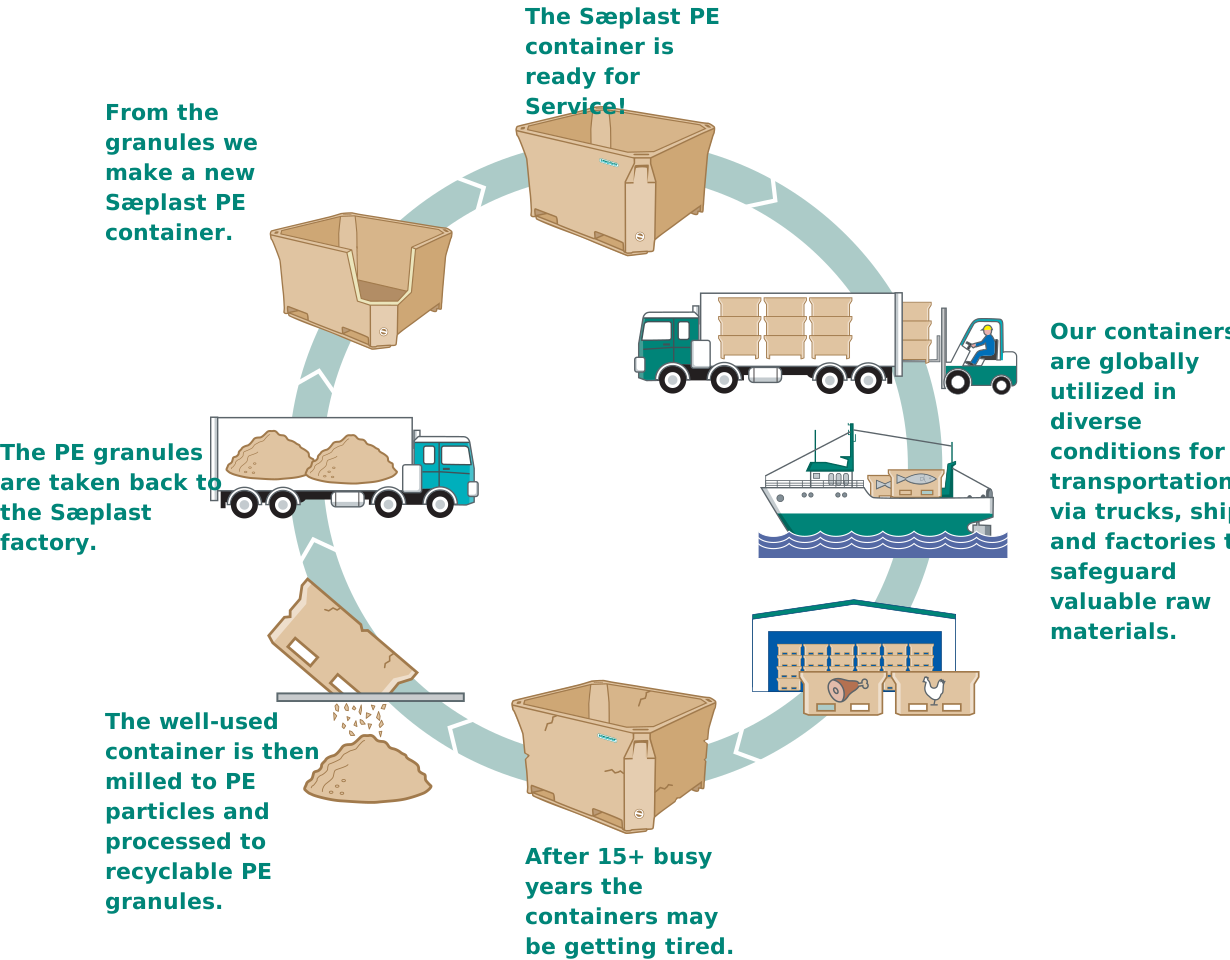
The product fit is practical. Sæplast containers support long-term use through strong construction, reusable design, material options for different applications, cleaning compatibility, tracking possibilities, repair services and end-of-life recycling routes for PE products in selected regions.
These factors connect directly to PPWR readiness:
- reducing reliance on single-use packaging where reusable systems are suitable
- extending the useful life of packaging and handling equipment
- improving control over reusable container fleets
- making repair and maintenance part of the system
- supporting documentation around use, cleaning, service and end-of-life handling
- supporting a more circular approach to packaging materials
What Sæplast can provide is a strong product fit for companies moving toward reusable, durable and better-managed packaging systems.

Practical next steps
How to start preparing
A reusable handling system needs to be specified, tested, approved, cleaned, tracked and integrated into daily operations. That cannot be done properly at the last minute.
A practical starting point is to review four areas.
First, review the current fleet. Identify where bulk packaging, transport packaging and reusable containers are already used. Map container types, applications, volumes, return flows and cleaning setup.
Second, map single-use exposure. Look beyond purchase price. Include disposal, EPR exposure, handling efficiency, product protection, storage, transport, waste and reporting pressure.
Third, model the transition. Compare total cost of ownership using real volumes, expected container lifetime, repair needs, cleaning costs, return logistics and operating conditions.
Fourth, build the documentation flow. Reuse only works as a readiness strategy if the system behind it can be shown. That means keeping control over use, cleaning, maintenance, repairs, declarations and end-of-life handling.
Not every packaging flow will move to reusable containers. Some applications will still need other packaging formats. But where reusable systems make operational sense, PPWR gives companies a stronger reason to review the business case now.
Sæplast can support that review with long-life reusable container solutions, repair options, tracking possibilities and practical experience from demanding material handling environments.
Explore the PPWR timelineKey dates, responsibilities and reusable packaging milestones from 2025 to 2040
Explore the key milestones and see who each requirement affects. Select a period below to move through the timeline.
Reuse Requirements relating to reusable packaging and reuse systems
Reusable packaging requirements
| Article | Obligation | Who it affects | Relevance for users |
|---|---|---|---|
| Art. 11 · Annex VI | Reusable packaging requirements: designed for many rotations, can be emptied/refilled without losing function, can be reconditioned, safe for workers Reuse | Manufacturer | Core requirement for tubs, pallets and IBCs to count as reusable |
General application
| Article | Obligation | Who it affects | Relevance for users |
|---|---|---|---|
| Art. 5 | Substance limits: lead + cadmium + mercury + Cr(VI) ≤ 100 mg/kg; PFAS limits in food-contact packaging; minimise substances of concern | Manufacturer | PFAS limits apply to food-contact packaging only |
| Art. 15 | Conformity assessment (Annex VII); technical documentation; EU declaration of conformity; identification marking (type/batch/serial); marking or QR code with name and contact details; documentation kept 10 years for reusable | Manufacturer | Buyers should request the declaration of conformity |
| Art. 16 | Provide manufacturers with information needed to show conformity | Supplier of packaging or materials | Resin and component suppliers to the manufacturer |
| Art. 18 | Verify conformity before placing on market; add own name and contact details | Importer | Packaging imported from outside the EU |
| Art. 19 | Verify that packaging bears required marking and information before making it available | Distributor | Dealers and resellers |
| Art. 21 | Manufacturer obligations transfer to anyone who markets packaging under their own name/trademark or modifies it | Importer or distributor | Customer-branded or modified packaging |
| Art. 26Art. 27Annex VI | Re-use system in place for reusable packaging: rules, tracking, reconditioning, incentives for re-use Reuse | Economic operators making reusable packaging available; users running their own closed loops | Closed loops between a processor and its customers count; incentives for re-use can be deposits |
| Art. 44 | Registration in each Member State where packaging is first made availableOnwards; national registration dates vary | Producer or PRO | Fillers shipping filled packaging to other Member States |
| Art. 47 | Authorisation of PRO or individual EPR compliance | Producer or PRO | Mostly handled by PROs |
| Art. 45 | EPR obligations incl. financial contributions | Producer | Fee paid on first making available |
Minimum rotations
| Article | Obligation | Who it affects | Relevance for users |
|---|---|---|---|
| Art. 11 | Minimum number of rotations for reusable packaging Reuse Deadline for the delegated act | Manufacturer | Delegated act will define what reusable means in numbers |
Annual reporting
| Article | Obligation | Who it affects | Relevance for users |
|---|---|---|---|
| Art. 44 | Annual reporting of packaging volumesAt the earliest; for the preceding calendar year | Producer or PRO | For the preceding calendar year |
Empty space in sales packaging
| Article | Obligation | Who it affects | Relevance for users |
|---|---|---|---|
| Art. 24 | Empty-space limitation: minimise empty space in sales packaging | Economic operator filling the packaging | The filler (the user), not the manufacturer |
Material-composition label
| Article | Obligation | Who it affects | Relevance for users |
|---|---|---|---|
| Art. 12 | Material-composition labelAt the earliest | Manufacturer | Not for transport packaging and deposit and return systems |
Reusable packaging label
| Article | Obligation | Who it affects | Relevance for users |
|---|---|---|---|
| Art. 12 | Label plus QR code/data carrier informing users that packaging is reusable Reuse At the earliest | Manufacturer | Check whether transport packaging is exempt |
Reuse targets, packaging design and recycled content
| Article | Obligation | Who it affects | Relevance for users |
|---|---|---|---|
| Art. 24 | Empty-space limitation: max 50% empty space in grouped packaging, transport and e-commerce packaging | Economic operator filling the packaging | The filler (the user), not the manufacturer |
| Art. 10Annex IV | Packaging minimisation by weight and volume | Manufacturer or importer | Separate from Art. 24: Art. 10 is about design, Art. 24 about filling |
| Art. 29 | Reuse system with 100% reuse of transport packaging, or sales packaging used for transport, used (a) between sites of the same company or partner/linked enterprises, and (b) for deliveries to another operator in the same Member State Reuse | Economic operators using the packaging | Pallets, crates, boxes, IBCs are explicitly listed; dangerous goods exempt |
| Art. 29 | Reuse system with reuse of at least 40% of transport packaging, or sales packaging used for transport, used within the EU. Reuse | Economic operators using the packaging | Pallets, crates, boxes, IBCs are explicitly listed; dangerous goods exempt |
| Art. 31 | Reporting on achievement of reuse targets to the Competent Authority Reuse First reporting year: 2030 | Economic operators | Users need data like rotation and fleet records |
| Art. 6Annex II | Design-for-recycling requirements for packaging. | Manufacturer | Packaging for dangerous goods exempt |
| Art. 7 | Minimum recycled content in plastic packaging: 10% in food packaging and 35% in other packaging. | Manufacturer or importer | Calculated per manufacturing plant per year; packaging for dangerous goods exempt |
Recycling at scale
| Article | Obligation | Who it affects | Relevance for users |
|---|---|---|---|
| Art. 6Annex II | Packaging must be recycled at scale. | Manufacturer | Packaging for dangerous goods exempt |
Recyclability grades
| Article | Obligation | Who it affects | Relevance for users |
|---|---|---|---|
| Art. 6Annex II | Recyclability grade C banned. | Manufacturer | Packaging for dangerous goods exempt |
Higher reuse and recycled-content targets
| Article | Obligation | Who it affects | Relevance for users |
|---|---|---|---|
| Art. 29 | Aim of 70% reuse of transport packaging, or sales packaging used for transport, used within the EU. Reuse | Economic operators using the packaging | Pallets, crates, boxes, IBCs are explicitly listed; dangerous goods exempt |
| Art. 7 | Minimum recycled content in plastic packaging: 25% in food packaging and 65% in other packaging. | Manufacturer or importer | Calculated per manufacturing plant per year; packaging for dangerous goods exempt |
Roles explained
Who is who under the PPWR. One company can have several roles at the same time.
- Supplier
- Any natural or legal person that supplies packaging or packaging material to a manufacturer.
- Manufacturer
- Any natural or legal person that manufactures packaging or a packaged product, or has it designed or manufactured, and markets it under its own name or trademark.
- Importer
- Any natural or legal person established in the EU that places packaging or packaged products from a third country on the EU market.
- Distributor
- Any natural or legal person in the supply chain, other than the manufacturer or importer, that makes packaging, including packaged products, available on the market.
- Producer
- The Manufacturer, Importer or Distributor that first makes available in the EU: transport packaging, service packaging or primary production packaging, whether single-use or reusable, or products packaged in other types of packaging.
- PRO
- A Producer Responsibility Organisation that financially organises the fulfilment of Extended Producer Responsibility obligations on behalf of several producers.
- Economic operator
- The manufacturer, supplier, importer, distributor, authorised representative, final distributor and fulfilment service provider.