



How Live-Handling Protocols and Sæplast Containers Unlock Premium Shrimp Margins
In the global Head-On Shell-On (HOSO) shrimp market, appearance isn’t just everything—it’s the difference between standard pricing and premium margins. Major importing regions like China, the United States, and Europe consistently assign the highest value to shrimp with dark, vibrant coloration (grades A3–A4), robust texture, and pristine cooking performance.
Yet, many producing regions naturally yield lighter, pale A2-grade shrimp. Bridging this gap requires shifting focus beyond farm management to a critical, often-overlooked stage: post-harvest live-handling and transport.
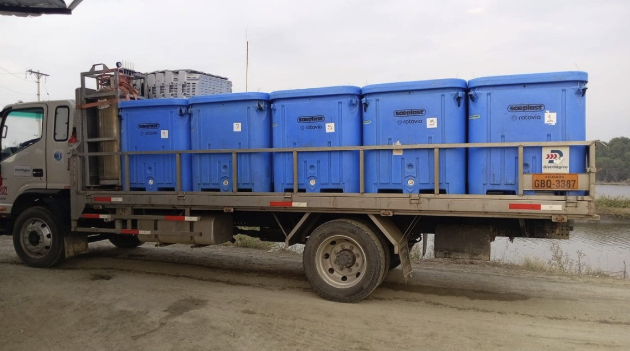
The Science of Stress and Shrimp Coloration
Achieving premium quality depends entirely on controlling three vital variables from the pond to the processing plant: temperature, oxygen availability, and physical stress. When Penaeus vannamei encounter harsh or abrupt environments during harvest, physiological stress degrades their organoleptic characteristics, leading to lighter color, flaccid texture, and ruptured hepatopancreases during cooking.
To close the market gap, industry expert Julio Castañeda (General Manager at AQUAPESCA S. de R.L.) validated a field-tested live-handling protocol in Central America and Ecuador. The core objective? Induce a controlled metabolic state that enhances coloration and preserves physiological stability.
The Two-Step Technical Protocol
Conditioning: Before transport, shrimp are immersed for 5–8 minutes in water held at 20°C with a dissolved oxygen (DO) level of 8 mg/L. This allows the shrimp to assimilate oxygen and adjust to a controlled metabolic pace.
Lethargic Transport: During the optimal 6-to-8-hour transport window, water temperatures are dropped to 15–17°C, and oxygen is brought to a state of supersaturation at 25–27 mg/L. This safely induces a lethargic state, entirely minimizing physical activity and stress.
Why Container Performance Dictates Profitability
A protocol is only as good as the container holding it together. Standard totes or single-walled containers fail under these technical parameters because they cannot prevent temperature fluctuations or water loss. To successfully execute this protocol, processors and producers rely on high-performance infrastructure, such as Sæplast insulated containers.
Live-shrimp logistics require specific equipment capabilities, seamlessly achieved by Sæplast’s design features:
- Superior Thermal Insulation: Maintaining strict, low transport temperatures (15–17°C) over an 8-hour journey requires dense, triple-walled construction to stop ambient heat transfer cold.
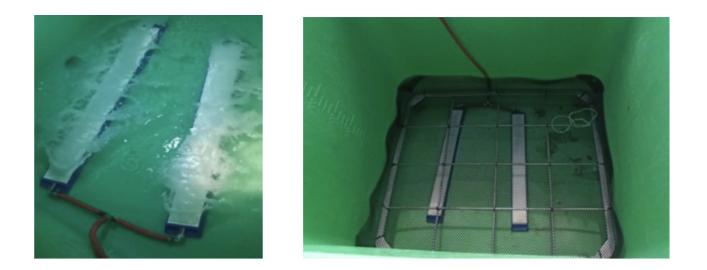
- Oxygen Diffusion & Supersaturation: Containers must successfully accommodate integrated oxygen diffusion ceramics and secure sealing systems to lock in vital oxygen supersaturation levels without leaking.
- Physical Protection: Sæplast’s smooth, food-grade internal walls prevent shell and limb damage, while their heavy-duty structural integrity supports internal multi-level mesh racking to prevent shrimp from crowding or crushing one another.

Proven Commercial Results
When this strict live-handling protocol is paired with the structural performance of insulated containers, the economic impact on the aquaculture value chain is profound:
| Metric | Traditional Harvest Methods | Optimized Live-Handling Protocol |
|---|---|---|
| Coloration Grade | Light / Pale (A2) | Premium Dark (A3–A4) |
| Post-Transport Survival | Variable / Unstable | Exceeds 95% |
| Physical Condition | High rates of external damage and cooking loss | High texture firmness, intact shells, minimal cooking loss |
| Hepatopancreas Integrity | High risk of rupture during cooking | Preserved integrity after cooking |
By protecting the cold chain and mitigating handling stress, producers see a direct uptick in commercial yield, a better export classification, and predictable, top-tier pricing in premium global markets.
Are you ready to optimize your post-harvest logistics and elevate your product to premium A4 status? Explore our range of seafood and aquaculture solutions or talk to a Sæplast expert today.
More Like This:
We Build for the Future – and the Equipment Must Match
Food processors around the world are under pressure to improve safety, reduce waste, streamline operations, and deliver consistent quality. Saeplast helps them do that with durable, hygienic, reusable material-handling solutions designed for the realities of food production.
Coastal Cleaning 2026
Food processors around the world are under pressure to improve safety, reduce waste, streamline operations, and deliver consistent quality. Saeplast helps them do that with durable, hygienic, reusable material-handling solutions designed for the realities of food production.
Solving Food Processing Pain Points Across Global Operations
Food processors around the world are under pressure to improve safety, reduce waste, streamline operations, and deliver consistent quality. Saeplast helps them do that with durable, hygienic, reusable material-handling solutions designed for the realities of food production.