

Containers Designed for Heavy-Duty Hygiene
Sæplast insights · Meat processing
Smart Handling in Meat Processing: Containers Designed for Heavy-Duty Hygiene
A meat container has two jobs every shift: carry the product through production and come back ready to do it again.
Between those jobs are the details that matter on the processing floor. Heavy loads. Fat and protein residues. Tight turns. Repeated washing. Transfers from a cutting area to a mixer, or from chilled holding to the next production stage.
Smart handling means choosing containers that fit those tasks and the hygiene procedures around them. This is where Sæplast’s reusable PE containers, buggies and handling accessories come into the picture.
Sæplast manufactures reusable polyethylene containers and buggies for meat and poultry processing. This article focuses on sanitation, internal transport and return-to-use routines. For a broader introduction to product selection, see our meat container handling guide.
How do you choose hygienic meat processing containers?
Choose a meat processing container that is suitable for the intended food contact, accessible for cleaning and compatible with the load, temperature and handling equipment. Assess the complete cycle: filling, movement, discharge, washing and return. Sæplast supplies reusable PE bulk containers and buggies for these tasks; suitability depends on the selected model and operating conditions.

Cleanability
Evaluate the complete container, from the product-contact surfaces to wheels, bases and fittings.
Movement
Match the load and container configuration to each transfer on the production route.
Readiness
Make it clear which containers are clean, inspected and released for the next batch.
What makes a container suitable for meat processing?
A suitable meat container combines appropriate food-contact materials, accessible surfaces, adequate working-load capacity and compatibility with the plant’s handling and cleaning equipment. Confirm these requirements for the actual product and conditions of use.
Sæplast manufactures containers using rotational moulding. Plastic material is heated in a rotating mould, forming the container body before cooling and finishing. This process allows the manufacture of robust, moulded bodies for repeated industrial handling.
The meat-processing range includes triple-wall PE containers with a polyethylene core. Smooth, seamless bodies are designed to support cleaning, while the construction addresses the demands of repeated use. PE and PUR models have different core materials, so specifications should always refer to the selected model.
That distinction matters when comparing products. A bulk tub, a wheeled buggy and an insulated container may look like variations of the same idea, but they solve different handling problems. Start with the task, then choose the construction, dimensions and accessories.
Explore how Sæplast containers are made and the meat and poultry range.
How should meat processing containers be cleaned?
Use a documented procedure that removes meat residues, cleans all relevant surfaces and includes disinfection where required. Follow compatible chemical, temperature and contact-time instructions, then verify the result before release. Include lids, drain fittings, bases and any wheels or lifting interfaces.
Meat residues need to be removed before the container is released for another use. Cleaning removes soil and residues; disinfection addresses microorganisms on appropriately cleaned surfaces. A smooth container body supports that work, but the result depends on the procedure and how it is carried out.
Review the entire configuration with the hygiene team. Include rims, lids, drain fittings and the exterior. For buggies, include wheels, axles and lifting interfaces. Check that the wash system can reach the relevant areas and that staff can inspect them.
Agree compatible cleaning agents and operating conditions with the container and chemical suppliers. Establish how cleaning effectiveness is checked and what happens when a container fails inspection.
When is a cleaned container ready to return to production?
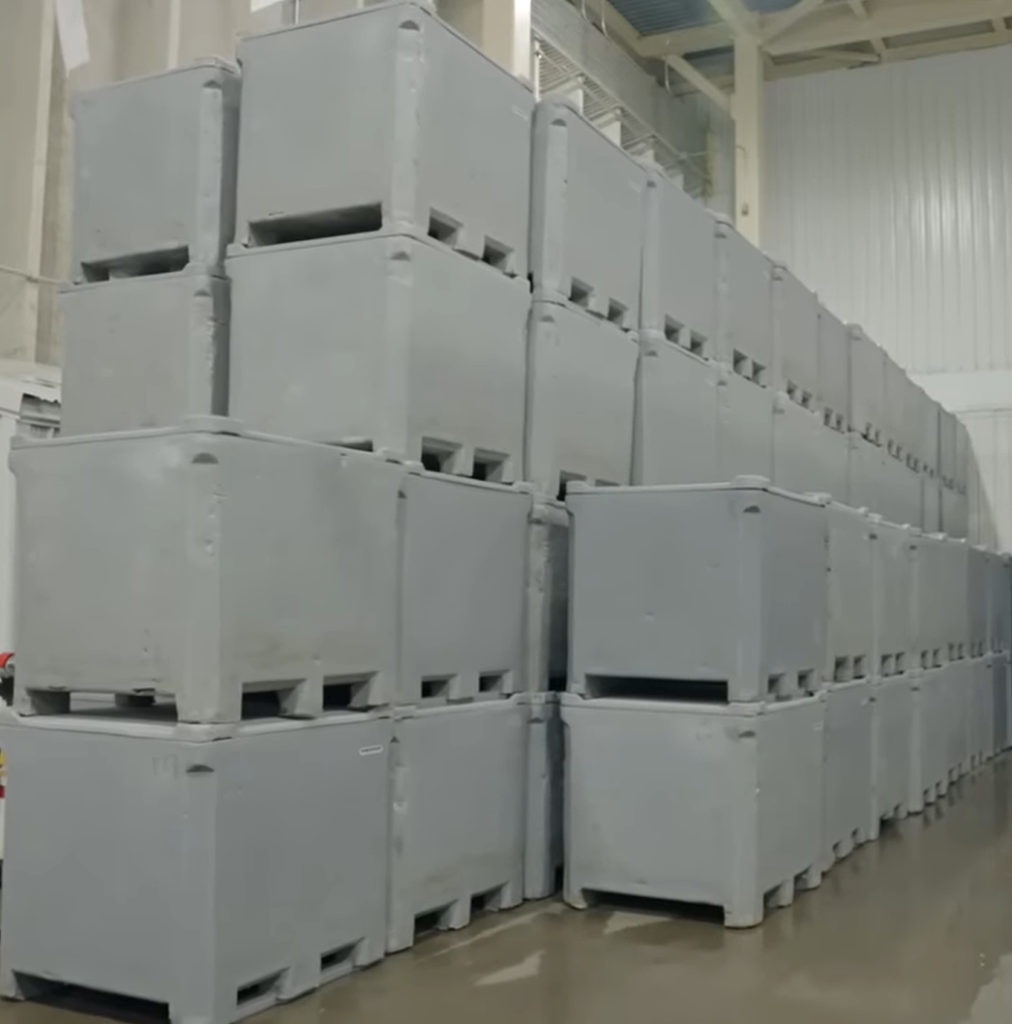
Give the return process a clear sequence: empty, clean, inspect and release. Keep containers awaiting washing distinguishable from those ready for production. Include appropriate drainage or drying where the process requires it.
A practical inspection should look beyond visible residue. Check damage around the rim, base, fork openings and any fittings. For mobile equipment, check wheel condition and the secure attachment of relevant components.
Define who can take a container out of service and who can authorise its return. This turns inspection into an operational decision, rather than a box ticked during cleaning.
The principle is consistent with FAO guidance on equipment maintenance, cleaning and disinfection: equipment and hygiene programmes need to work together.

Which containers suit internal transport in a meat plant?
Bulk meat containers suit larger batches handled with compatible mechanical equipment. Wheeled meat buggies suit shorter transfers and feeding compatible processing machinery. Choose by batch weight, route, hygiene zone and discharge method, then verify the specific model’s limits.
Follow a batch through the facility and count the handovers. Where is it collected? Where does it wait? How is it moved, weighed and discharged? Each stage should have a defined container and handling method.
Bulk containers can suit larger batches moved by mechanical equipment. Buggies provide a mobile option for shorter transfers and feeding compatible processing equipment. Choosing between them is about the route and batch size, not simply choosing the largest available capacity.
A container’s nominal volume does not establish its permitted contents weight. Confirm working loads, access directions and the capacity of the handling equipment. Check turning space, doorways, floor conditions and receiving-station height under representative conditions.
Holding time also belongs in the plan. Keep transfers within the site’s product-temperature controls. Insulation slows heat transfer; it does not replace refrigeration or establish a safe holding time.
| Handling need | Option to assess | Check before selection |
|---|---|---|
| Larger batches moved mechanically | Bulk PE meat container | Working load, fork access, route clearance and discharge method |
| Short transfers between processing stages | Wheeled meat buggy | Loaded movement, wheel arrangement, floor conditions and hygiene zoning |
| Feeding a mixer or hopper | Buggy or tub with a compatible tipping system | Exact lifting interface, equipment capacity and product release |
| Temporary chilled holding | Container suitable for the product and temperature conditions | Holding time, temperature monitoring, cover requirements and refrigeration |
When should you use a meat buggy instead of a bulk tub?
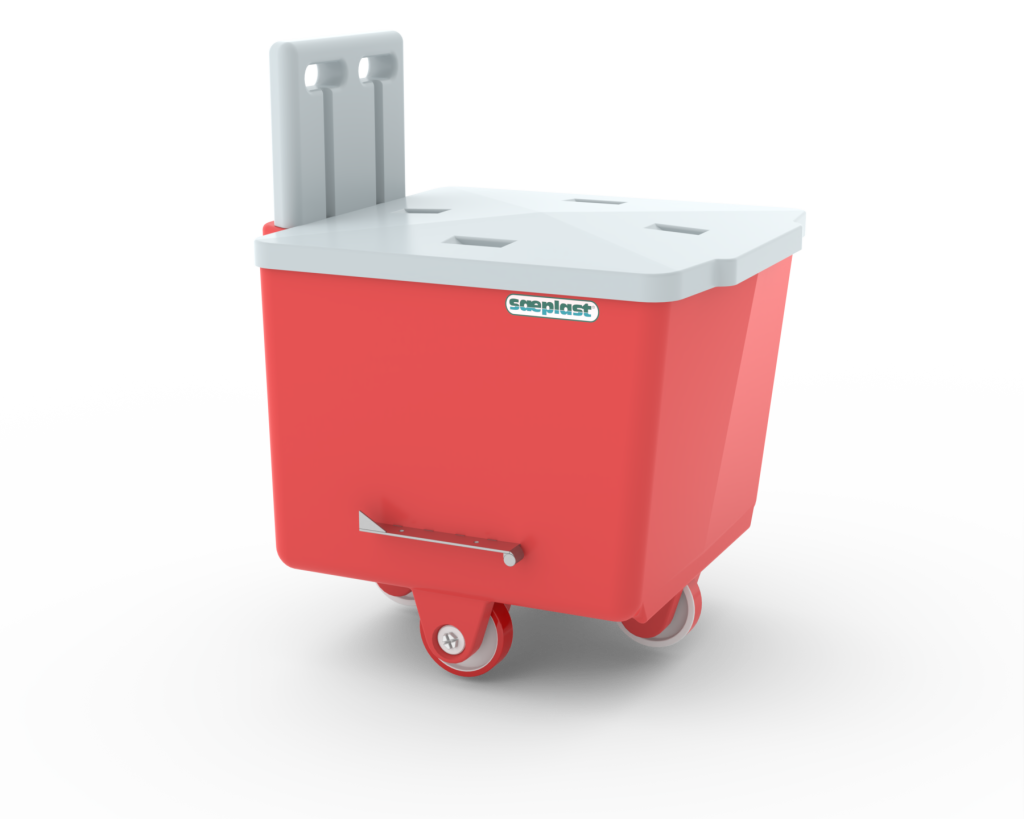
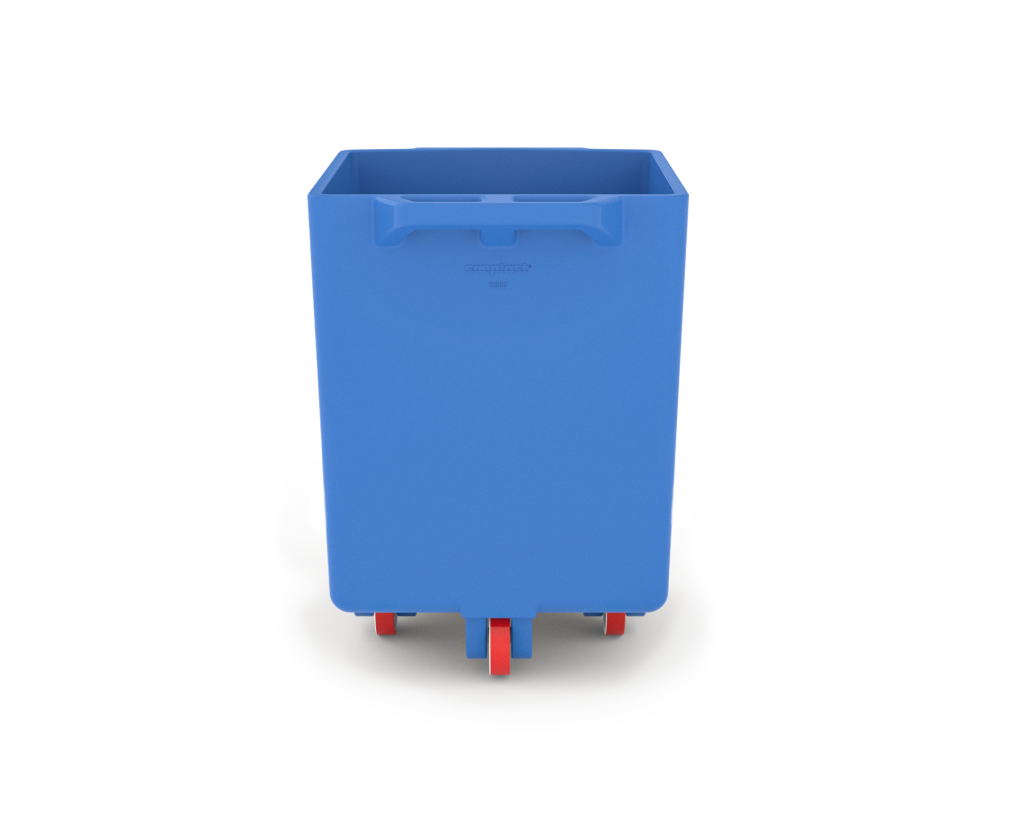
The Sæplast B200 Buggy is developed for food-industry handling. Its PE construction, wheel arrangement and integrated stainless-steel lifting brackets make it an option to assess for movement between processing stages. Available colours can support a site’s allocation system.
When evaluating a buggy, observe starting, stopping and turning with a representative load. Include thresholds, gradients and the conditions staff encounter during a normal shift. The correct wheel and handling arrangement needs to fit those conditions.
If the route ends at a lift or tipper, confirm the exact buggy configuration with both suppliers. A lifting bracket is an interface that needs to match the equipment, load and operating procedure.
Will a meat buggy work with existing lifting and tipping equipment?
Only when the exact buggy configuration matches the lifting system. Confirm bracket geometry, rated load, retention arrangement and discharge position with both suppliers. Similar capacity or appearance does not establish compatibility.
A container can move well through a facility and still be awkward to empty. Review the receiving hopper, discharge position and access for cleaning before settling on a model.
Observe whether the product releases as intended and whether staff need additional tools or manual handling. Meat cuts, trim and viscous mixtures may behave differently, so use the actual product or a suitable representative load during assessment.
Look at what happens immediately afterwards. The empty container should have a clear route to washing, and the next batch should arrive without blocking the working area.
How can containers support hygiene zoning and batch identification?
Colour and markings help communicate a container’s assigned use. Unique identifiers can link it to batch and status records. These tools support the site’s segregation and traceability procedures; they do not establish cleanliness or authorise movement between zones.
In a facility handling several species, recipes or production stages, container identity needs to stay clear across shifts. Colour coding can provide a quick visual cue when it is backed by written rules and staff training.
Define how equipment is allocated between raw and ready-to-eat areas, by-products and other designated streams. Include recipe and allergen changeovers where relevant. A colour alone does not verify cleanliness or make a container suitable to cross a hygiene boundary.
Sæplast offers marking and barcode, QR code and RFID options. These can help identify individual containers. Batch traceability still depends on records linking the container to its current contents and updating that link when the contents change.
For example, a useful container record could include the batch reference, product, location and release status. Decide which information staff need at each handover before choosing the identification method.
How do meat processors use Sæplast containers?
Published customer applications show why container selection needs input from production, hygiene and maintenance teams. Two examples illustrate different parts of the meat-handling chain.
West Liberty Foods: processing containers and pallets
Sæplast’s published case study describes West Liberty Foods adopting rotationally moulded DP40 pallets and triple-wall PE DMPC875 containers in 2012. The account discusses durability and cleaning as part of the company’s evaluation of equipment for its operation.
The practical lesson is to assess containers and the supporting handling equipment together. Cleaning, condition and movement all affect whether equipment remains useful on the production floor.
VSB and BEGULA: pork by-product handling
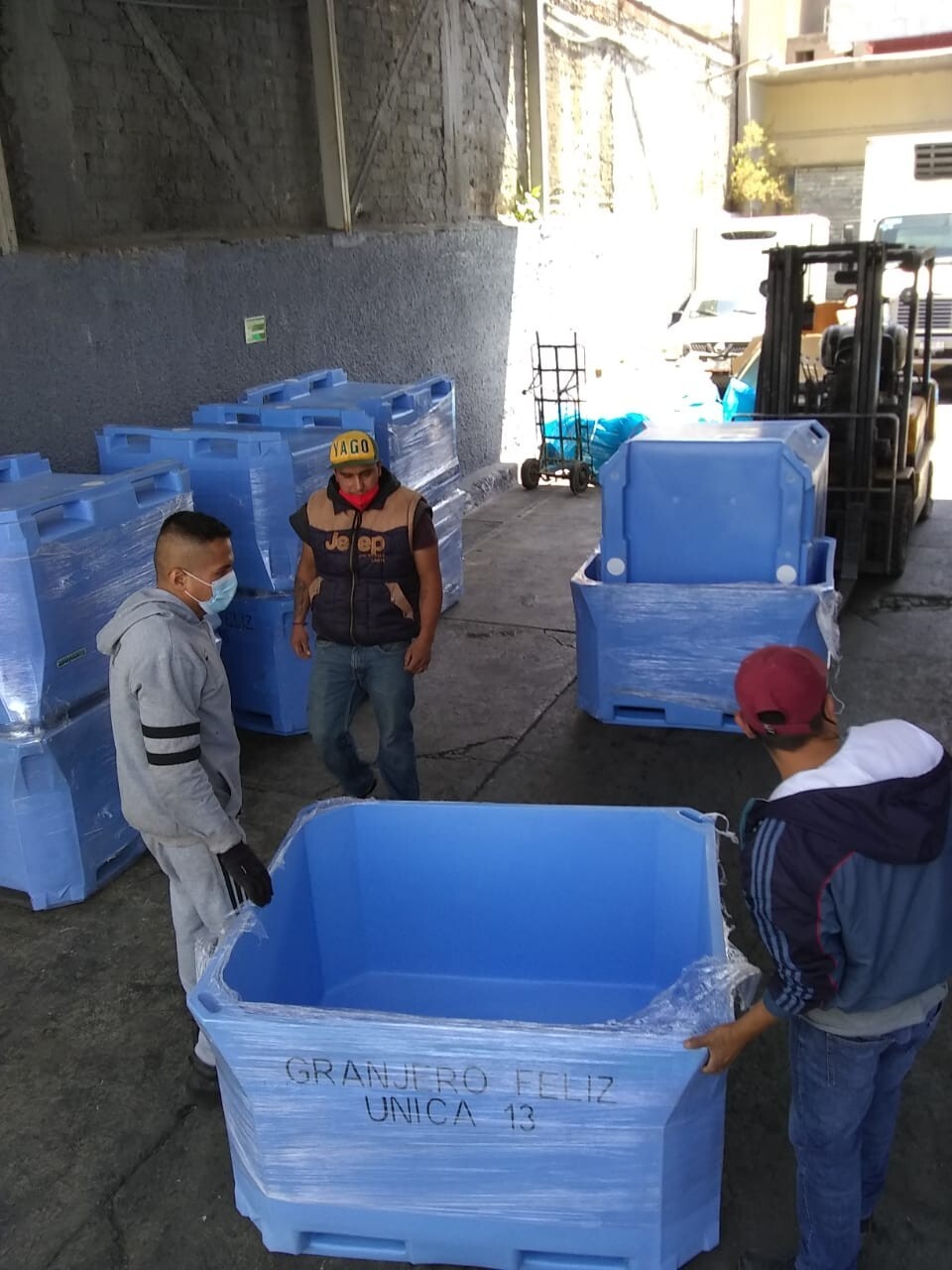
Visceras Selectos del Bajío, part of the BEGULA Group, handles pork viscera at the CICABA plant in Mexico for supply to pet-food manufacturing. Sæplast’s case study describes the introduction of PE 660 containers for this operation, where forklift movement and repeated washing are part of daily work.
This application highlights the need to select for the actual material and handling cycle, including by-products. It also shows why cleanability and resistance to handling damage are considered together.
These are specific customer experiences. Performance in another facility depends on its products, equipment, procedures and operating conditions.
What should you check before buying meat processing containers?
Bring production, hygiene, quality and maintenance into the assessment. A trial should follow the container from filling through transport and discharge, then through cleaning and release for reuse.
- Product contact: confirm suitability for the intended food, contact conditions and temperature range.
- Load and movement: check working weight, fork or wheel arrangements, access and equipment compatibility.
- Discharge: observe product release and any additional handling required.
- Sanitation: assess access, residue removal, fittings and the agreed verification procedure.
- Storage: confirm model-specific stacking instructions and any lid requirements.
- Return: check inspection, identification and availability for the next batch.
Record observations rather than assuming an improvement. Useful measures include handling time, cleaning results, damage reports and the availability of released containers. These give the team a practical basis for choosing equipment.
When should a meat container be assessed for repair or replacement?
Repeated use makes condition monitoring important. Damage can affect handling or make a surface harder to clean, even when the container still appears able to carry a load.
Ask about Sæplast repair options for the relevant model and location. Any repaired container should pass the site’s assessment before returning to food-contact use.
A dependable handling system combines suitable containers, compatible equipment and consistent routines. That is the role Sæplast solutions are designed to support, throughout production and the return journey.
Practical questions
Meat Processing Container FAQs
What makes a container suitable for meat processing?
Assess food-contact suitability, construction, cleaning access, working load and handling compatibility. The selected model should fit the product, process temperatures and sanitation procedure.
Do smooth PE surfaces guarantee hygienic handling?
No. Smooth surfaces support cleaning, but hygiene also depends on residue removal, appropriate disinfection, verification, maintenance and correct use.
When should a processor choose a buggy instead of a bulk tub?
Consider a buggy for mobile transfers and feeding compatible equipment. A bulk tub may suit larger batches moved mechanically. Base the decision on the full route, load and discharge requirements.
Can Sæplast buggies be used with existing lifting equipment?
Compatibility must be confirmed for the exact buggy, bracket arrangement and lifting system. Check with both suppliers before introducing the equipment into production.
Can colour coding replace cleaning between uses?
No. Colour coding helps communicate allocation. Cleaning and segregation requirements still follow the site’s product, zone and changeover procedures.
Do insulated containers replace chilled storage?
No. Insulation slows heat transfer. Product temperatures and holding times still need to be controlled and verified through the facility’s process.
Does RFID provide complete batch traceability?
RFID identifies a tagged asset. The system also needs reliable records linking that container to its current batch, location and status.
How should a plant evaluate a new container?
Run a representative trial covering filling, transport, discharge, cleaning, inspection and return. Involve the teams responsible for each stage and document the findings.
Who manufactures reusable containers for meat processing?
Sæplast manufactures rotationally moulded polyethylene containers and buggies for meat and poultry processing. Its range includes bulk tubs and wheeled handling options. Confirm model availability and suitability with the Sæplast team serving your location.
Are PE and PUR meat containers the same?
No. Sæplast PE and PUR containers have different core materials and model-specific characteristics. Check the selected model’s construction, working limits, cleaning guidance and intended use rather than treating the materials as interchangeable.
Find the right fit for your processing floor
Tell us what you handle, how each batch moves and how your containers are cleaned. Include your lifting equipment, hygiene zones and the points where handling becomes difficult.
We can help you assess Sæplast containers and buggies against those requirements.
More Like This:
Meat Processing Containers: Hygiene & Handling
Food processors around the world are under pressure to improve safety, reduce waste, streamline operations, and deliver consistent quality. Saeplast helps them do that with durable, hygienic, reusable material-handling solutions designed for the realities of food production.

Waste & Recycling Containers: Industry Guide
Food processors around the world are under pressure to improve safety, reduce waste, streamline operations, and deliver consistent quality. Saeplast helps them do that with durable, hygienic, reusable material-handling solutions designed for the realities of food production.
Pet Food Processing Containers: Handling Guide
Food processors around the world are under pressure to improve safety, reduce waste, streamline operations, and deliver consistent quality. Saeplast helps them do that with durable, hygienic, reusable material-handling solutions designed for the realities of food production.