

Pet Food Processing
Sæplast insights · Pet food processing
Pet Food Processing Containers: A Practical Guide to Better Batch Handling
Every batch has a recipe. Every container needs a clear role in protecting it.
Pet food production brings together ingredients with very different handling needs: chilled proteins, dry meals, oils, premixes and finished products. Moving them through a facility requires more than spare capacity.
The container must suit the material, fit the equipment and keep the batch identifiable through each handover. It also needs to return to service in the right condition for its next use.
This guide explores how to choose pet food processing containers for wet, dry and raw production, with practical considerations for hygiene, recipe changes, traceability and daily handling.
What are pet food processing containers?
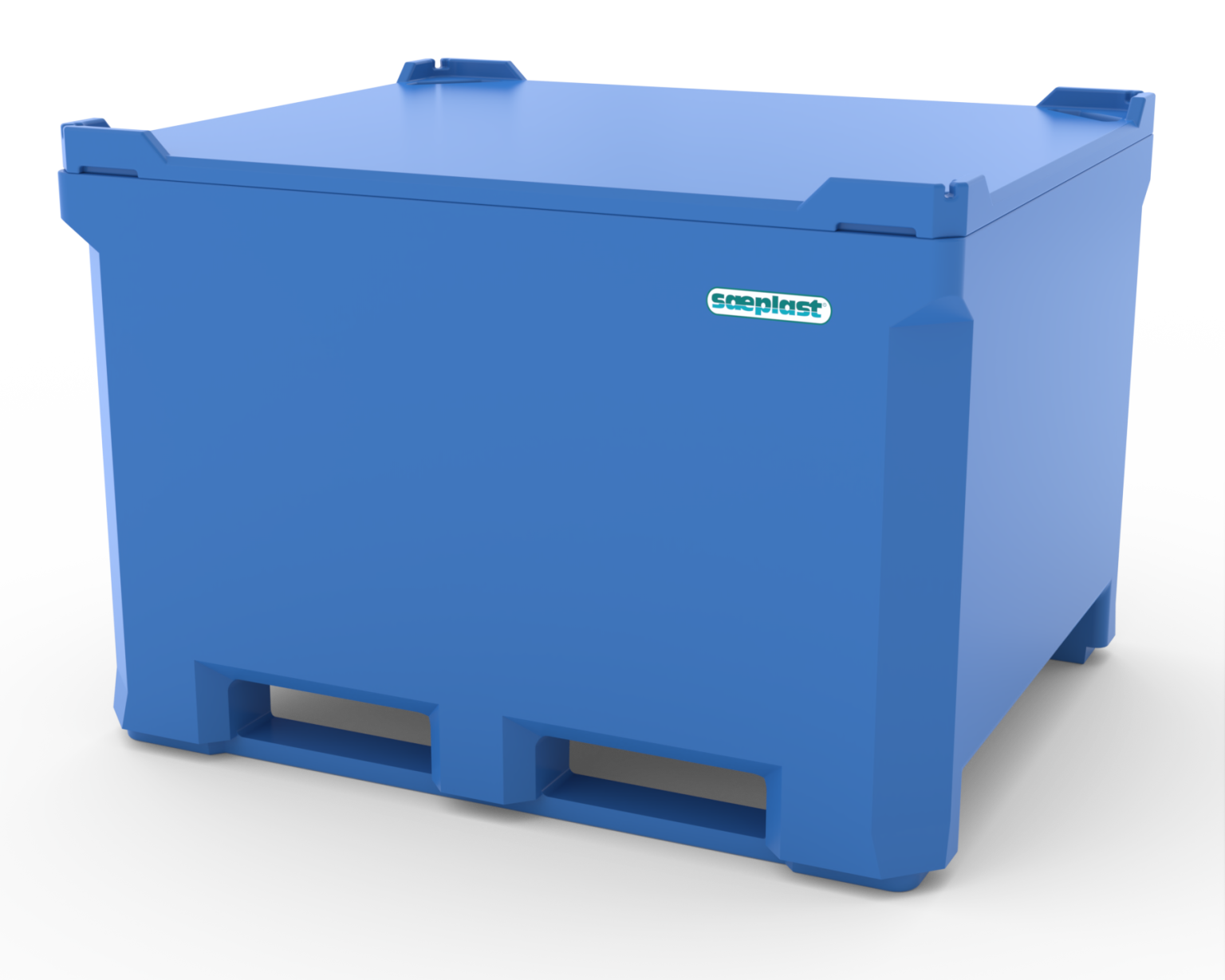
Pet food processing containers are reusable vessels used to collect, hold and move ingredients or products within manufacturing operations. Bulk tubs and wheeled buggies can support different stages, from preparing a batch to transferring it into further-processing equipment.
They are industrial handling equipment, distinct from the retail packaging that reaches the pet owner. Their specification should describe what they carry, where they travel and how they are emptied and cleaned.
Sæplast offers containers and buggies for pet food manufacturers. The appropriate choice depends on the specific application and model configuration.
Wet, dry and raw products need different handling plans
A single facility may handle several product formats. Treat each as a separate operating requirement before deciding whether equipment can be shared.
Wet pet food and moist ingredients
Meat mixtures, gravies and other moist materials can leave residues that influence discharge and cleaning. Assess how the batch flows, how completely it empties and whether staff can access the relevant surfaces afterwards. Confirm any temperature and contact-time limits for the container.
Dry pet food and powders
For meals, powders and kibble, consider dust, moisture exposure and protection after processing. Review the empty container as carefully as the product: a container released from washing must meet the cleanliness and dryness requirements of its next task.
Raw and frozen pet food
Raw product needs its own hazard controls, handling routes and temperature-management arrangements. Freezing is not a substitute for a validated pathogen-control process. Check the container’s suitability for the intended temperature range, loading and handling method.
Give raw and processed materials separate routes
Map container movements around the process steps that control hazards. Where the process includes a validated treatment, look at what happens afterwards as well as before it.
A clean interior can be recontaminated by a lid, utensil, wheel or base moving through an unsuitable area. Include those contact points in the zoning plan.
Define which equipment remains within each zone and what is required before it crosses a boundary. Colour coding can support recognition, but the colour needs a documented meaning and consistent use.
The FDA’s animal food preventive-controls framework emphasises hazard analysis and controls suited to the facility and product. Container selection should support the applicable site plan, rather than be treated as proof of compliance.
Protect recipe identity at every handover
Pet food handling involves nutritional accuracy as well as hygiene. The wrong premix, an incorrect addition or unrecorded carryover can affect the finished formulation. FDA guidance identifies nutrient deficiencies and toxicities as relevant animal-food hazards.
Keep ingredient identity, supplier lot and release status available to the person using the material. When ingredients are decanted, the identification should move with them.
For pre-weighed batches, define how staff confirm the recipe, quantity and destination before adding the contents to a mixer. A large tub suitable for bulk ingredients is not automatically appropriate for small, concentrated additions.
Recipes intended for different species, life stages or product claims may also need different segregation rules. Have the formulation and quality teams establish acceptable changeover and carryover controls. Do not simply copy a human-food allergen checklist into a pet food operation.
Set rules for rework before it is collected
Rework should have a defined identity, status and permitted destination. Avoid allowing a convenient container to become an unrecorded collection point for leftovers from unrelated batches.
Record the source recipe and batch, quantity, processing history and any holding conditions that matter to its use. Establish who can release the material and which formulations may receive it.
When it is added to a later batch, retain the connection in the production record. If material is rejected or its identity is uncertain, segregate it so it cannot be mistaken for usable rework.
For animal-derived materials, supplier approval, eligibility and any applicable animal by-product requirements also need to be addressed by the site’s quality procedures.
Check how the batch enters the next machine
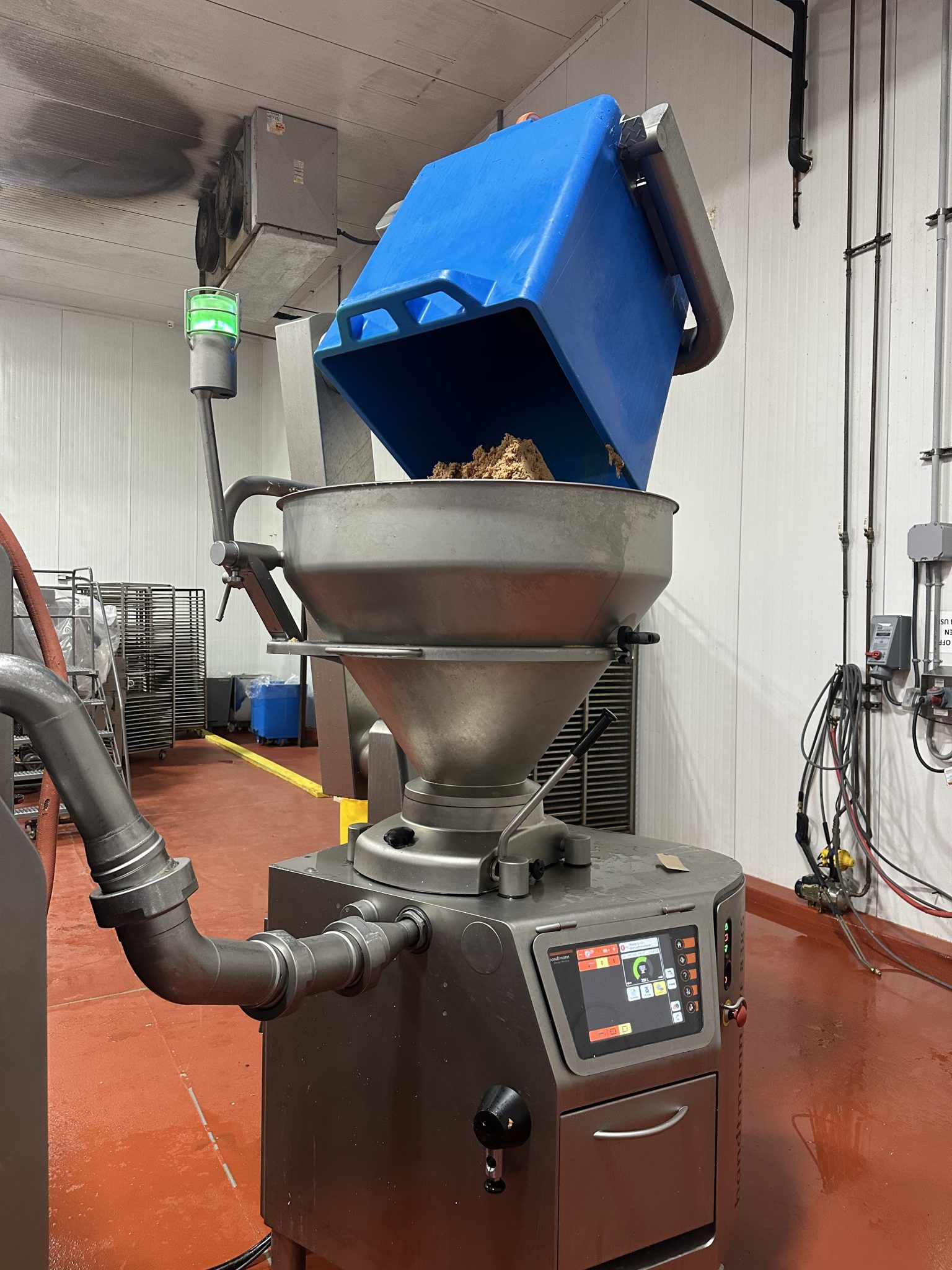
A container can have the right capacity and still create extra handling if it does not fit the receiving equipment.
Before purchase, confirm the exact model, lifting interface, loaded weight and discharge clearance with the container and equipment suppliers. Never assume that every buggy is designed for mechanical tipping.
Observe a representative transfer. Does the product discharge as intended? Is additional scraping required? Can staff perform the task using the approved procedure?
For kibble and other fragile products, review drop heights and repeated transfers as potential sources of breakage. For wet mixtures, include retained residue in the trial assessment.
Match the cleaning method to the production area
Residues from fats, proteins and dry powders may call for different cleaning approaches. The method also has to suit the production environment and the container’s construction.
Review internal surfaces, rims, lids, drains and fitted components. Include the underside, wheels and lifting features where relevant to the hygiene plan.
Cleaning removes soil and residues. Disinfection is a separate microbiological control applied under an appropriate procedure. Follow supplier guidance for chemical compatibility, concentrations, contact times and any rinsing requirements.
In areas intended to remain dry, assess the consequences of introducing water. Specify the condition a cleaned container must reach before release for dry ingredients or finished kibble.
Record inspection and verification results as required by the site plan. Equipment design can make access easier, but it cannot demonstrate that a cleaning procedure has worked.
Separate temperature protection from active cooling
Insulated containers slow heat transfer. They do not actively refrigerate a batch, and they should not be assumed to provide the right conditions for cooling warm product.
Sæplast’s triple-wall PE construction uses polyethylene walls and a polyethylene foam core. PUR containers use polyethylene walls with polyurethane insulation. Compare the selected model against the actual handling and temperature requirements.
For chilled or frozen materials, define the permitted holding conditions, monitoring and action when limits are exceeded. Verify cooling or freezing performance where those processes are required.
Avoid specifying one universal holding time or temperature for every pet food ingredient. Those limits belong to the product-specific safety and quality plan.
Link the container to its contents, not just its location
A container number tells you which piece of equipment you have. It does not, by itself, tell you which recipe or batch is inside.
Sæplast offers identification and tracking options for suitable products. To support batch traceability, connect the identifier to the current contents and update the record when material is transferred, combined or emptied.
Keep held, released and rejected material clearly distinguishable. Make obsolete labels part of the changeover check.
Test the system with a simple exercise: select a filled container and ask another shift to identify its source, status and intended destination. Any uncertainty reveals where the process needs attention.
Choose for the full working cycle
Bring production, quality, hygiene and maintenance staff into the selection process. A short trial should include the return journey as well as the loaded movement.
- Confirm material-contact suitability for the ingredients, temperatures and contact times involved.
- Match working volume and loaded weight to the batch and handling equipment.
- Check the lid, discharge arrangement and access for cleaning.
- Define zones, recipe identification and rework rules.
- Assess floor conditions, turning space and manual handling under representative loads.
- Allow sufficient equipment for washing, drying, inspection and dedicated uses.
Build condition checks into that cycle. Isolate damaged containers and obtain an assessment before repair or return to production. Review repeated damage for an underlying handling or equipment issue.
Compare working-life costs using your own operating data, including cleaning, handling, losses and replacement. Durability is most valuable when the container also fits the process.
Food safety is a system. Suitable containers support it alongside hazard controls, accurate formulation, staff training and verified operating procedures. Apply the requirements relevant to your products and markets.
Your questions answered
Frequently Asked Questions About Pet Food Processing Containers
What should I look for in pet food processing containers?
Start with the product format, working load, contact conditions and handling route. Then assess cleaning, identification, segregation, lids and equipment compatibility for the specific model.
Can the same containers handle wet and dry pet food?
Potentially, but only where the model is suitable and the site has defined the cleaning, drying and release conditions for each use. Dedicated equipment may be preferable for particular zones or recipes.
Can Sæplast containers be used for raw or frozen pet food ingredients?
Discuss the specific product, temperature range, contact time and handling method with Sæplast. Confirm the selected model’s suitability and integrate it into the facility’s raw-material and temperature-control procedures.
Does dry pet food need contamination controls?
Yes. Dry appearance does not establish microbiological safety. Protect processed products from contamination and follow the controls identified by the site’s hazard analysis.
Does colour coding guarantee separation between recipes?
No. It is a visual aid that needs allocation rules, labelling, staff training and appropriate cleaning or dedicated equipment.
Can all buggies be used with a tipper?
No. Models and lifting interfaces differ. Confirm the exact buggy configuration and equipment compatibility with both suppliers before use.
Do insulated containers replace refrigeration?
No. Insulation slows heat transfer. Any required refrigeration, cooling or freezing must be provided and verified through the appropriate process.
How should pet food rework be handled?
Give it a source batch, recipe identity, quantity and status. Define permitted uses and release responsibilities, and record its addition to subsequent batches.
Does RFID provide complete batch traceability?
RFID can identify a container. Traceability also needs records linking that container to its current contents and updating the association when the batch changes.
How many containers will a production line need?
Account for filling, waiting, transfer, cleaning, drying, inspection and return. Include dedicated equipment and planned maintenance so clean, suitable containers remain available.
Find the right container for your pet food process
Tell us what you handle, your batch size and how material moves through your facility. Include your lifting equipment, cleaning method and any temperature or segregation requirements.
Our team can help you compare Sæplast containers and buggies for your production needs.
More Like This:

Waste & Recycling Containers: Industry Guide
Food processors around the world are under pressure to improve safety, reduce waste, streamline operations, and deliver consistent quality. Saeplast helps them do that with durable, hygienic, reusable material-handling solutions designed for the realities of food production.

Pet Food Processing Containers: Handling Guide
Food processors around the world are under pressure to improve safety, reduce waste, streamline operations, and deliver consistent quality. Saeplast helps them do that with durable, hygienic, reusable material-handling solutions designed for the realities of food production.
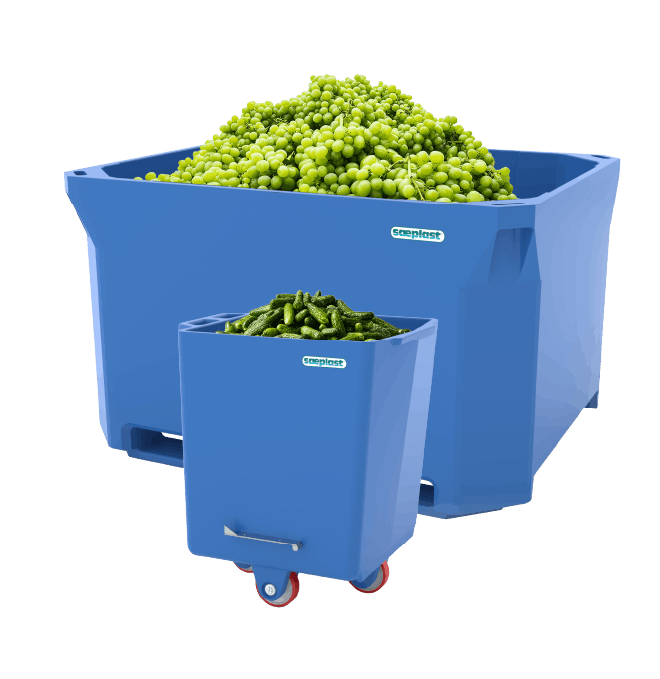
Food Processing Containers: Ingredient Handling
Food processors around the world are under pressure to improve safety, reduce waste, streamline operations, and deliver consistent quality. Saeplast helps them do that with durable, hygienic, reusable material-handling solutions designed for the realities of food production.