


Sæplast insights · Fish & seafood
Fish Tubs: A Practical Guide to Better Seafood Handling
A container may handle thousands of loads during its working life. Each time it is filled, moved, emptied and cleaned, its design makes a difference to the people using it and the product inside.
For seafood businesses, choosing the right fish tub means considering more than capacity. Construction, insulation, cleaning access and compatibility with handling equipment all influence how well a container fits into daily operations.
This guide explains the role of fish tubs, the differences between Sæplast PE and PUR containers, and the questions worth asking before investing in your next fleet.

What are fish tubs?
Fish tubs are reusable containers used to hold and move fish and seafood during handling, storage and transport. Depending on the application, they may carry seafood with ice or form part of another controlled chilled-handling process.
Commercial tubs are designed for repeated use in demanding environments. Their suitability depends on the specific task, including the product being handled, the loaded weight, the available space and the equipment used to move them.
Sæplast’s seafood range includes different container sizes and constructions for operations at sea and on land.
Start with the journey your seafood takes
Before comparing containers, map the route each load follows through your operation. Where is it filled? How is it moved? Where is it emptied and washed? Does it return to the same location?
On board and at landing: Available space, access and handling arrangements should guide the choice. Check the selected model’s intended use and approved lifting arrangements before incorporating it into vessel operations.
Inside a processing facility: Consider how the container interfaces with equipment, workstations and cleaning procedures. A suitable footprint can be just as important as the volume it holds.
Between facilities: Plan for identification, collection and return. A reusable container needs a clear route back into service.
During temporary holding: Assess the complete temperature-control process, including product condition, cooling method, holding time and ambient conditions.
PE or PUR: understanding Sæplast container construction
Sæplast offers both PE and PUR containers. The distinction concerns the construction of the container, including its core.
Triple-wall PE containers. Sæplast triple-wall PE containers use polyethylene throughout their construction, including a PE foam core. This construction provides strength for repeated handling and supports recycling at the end of the container’s usable life. These containers are worth considering where intensive use, durability and material recovery are central purchasing priorities.
PUR insulated containers. Sæplast PUR containers combine polyethylene walls with a polyurethane insulating core. They are designed for applications where insulation performance is an important part of protecting product quality during handling, storage and transport.
Discuss the required insulation performance, handling conditions and container configuration with Sæplast before selecting a model.
Choose capacity and footprint together
Two containers can offer a similar volume while fitting very differently into your operation. External dimensions determine how a tub fits through access points, occupies floor space and works with existing equipment. Internal dimensions determine whether it suits the size and arrangement of the product.
When comparing options, establish the amount of seafood in each batch, space required for ice, total loaded weight, available space, equipment access and approved loading and stacking limits.
Check the published specifications rather than treating a model name as its exact capacity. For example, Sæplast’s product catalogue lists the 460 PE container at 420 litres and the 660 PE container at 643 litres. Confirm the selected variant and regional availability when requesting a quotation.
Make cleaning part of the selection process
Cleaning is a recurring part of a reusable container’s working life. It deserves attention before purchase, alongside capacity and handling.
Sæplast PE containers feature a seamless construction, with rounded edges and surfaces that facilitate cleaning. These design features support access during washing and inspection.
Evaluate the container against your actual cleaning procedure. Can staff inspect the interior easily? Can your washing equipment accommodate its dimensions? Are drains, plugs and lids accessible for cleaning where fitted?
Include routine condition checks in the process. Damage that affects cleaning or intended use should be assessed before the container returns to service.
Match the tub to your handling equipment
Before ordering, confirm forklift or pallet-jack access, compatibility with tipping equipment where relevant, and any lifting requirements. These features vary by model.
For example, Sæplast lists forklift and pallet-jack access on all sides for its 1000 PE container. That is a useful specification to check against your own layout, particularly where approach space is limited.
If you plan to combine new containers with an existing fleet, ask Sæplast to confirm compatibility. Similar dimensions alone are insufficient to establish whether different models can be stacked together.
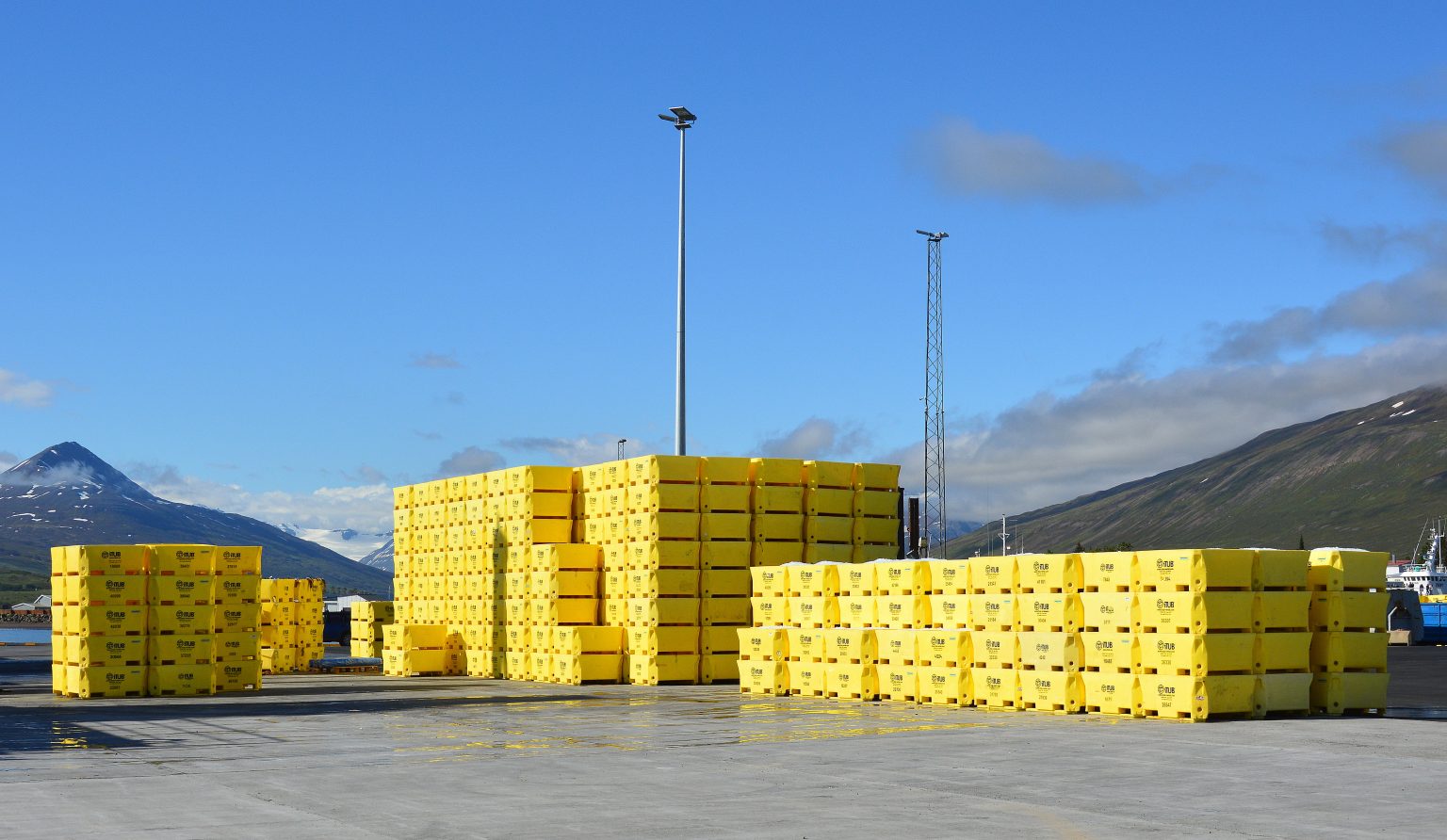
Plan identification before containers leave your site
When containers circulate between vessels, processors and customers, clear identification helps teams recognise ownership and manage returns.
Sæplast offers customisation options that can include colours, branding and markings. Availability depends on the product, production requirements, order quantity and region.
For businesses using digital asset management, barcode, QR-code and RFID options can support container identification within a compatible tracking system. Establish what information you need to capture, and where it will be recorded, before selecting the technology.
Assess value over the working life
The purchase price is only one part of the cost of operating a container fleet. A practical comparison should also account for cleaning, handling, return transport, losses, maintenance and eventual replacement. Use your own operating data wherever possible.
Repairability is another consideration. Sæplast offers repair services that can help extend container life and reduce the need for replacement. Suitability should be assessed according to the damage and the container’s intended use.
For procurement teams, this creates a more useful question than price alone: what will it cost to keep the required number of suitable containers in service?
Include end-of-life planning from the beginning
A reusable fleet needs a plan for containers that can no longer remain in service.
Sæplast triple-wall PE containers use polyethylene in both the walls and core. Sæplast also offers collection and recycling options, subject to location, material, condition and service availability.
Discuss these arrangements when selecting containers. Knowing the construction and available recovery route helps your business plan beyond the initial purchase.
Experience rooted in seafood
Sæplast was founded in Iceland in 1984, with roots in the fishing community of Dalvík. That background continues to inform a container range developed for demanding handling environments.
Today, Sæplast supports seafood businesses with PE and PUR containers for different operational requirements, alongside services that help customers manage their equipment throughout its working life.
Your questions answered
Frequently Asked Questions About Fish Tubs
What are fish tubs used for?
Fish tubs are reusable containers used to handle, store and transport fish and seafood. They can support operations on fishing vessels, at landing sites, inside processing facilities and between businesses. The appropriate container depends on the product, cooling requirements, available space and handling equipment.
What is the difference between PE and PUR fish tubs?
Sæplast triple-wall PE containers use polyethylene throughout their construction, including a PE foam core. They are designed for strength, durability and repeated handling. PUR containers combine polyethylene walls with a polyurethane insulating core for applications where insulation performance is a key requirement. The best choice depends on your handling process and temperature-control needs.
Do insulated fish tubs keep fish cold without ice?
Insulation slows heat transfer, but it does not actively cool the contents. The need for ice or another cooling method depends on the starting temperature of the seafood, the surrounding conditions and the duration of storage or transport. An insulated tub should form part of your controlled cold-chain process.
How do I choose the right fish tub size?
Consider your typical batch size, the space required for ice, the total loaded weight and the equipment used to move the container. Check both internal and external dimensions. The tub must accommodate your product while fitting your vessel, processing layout, storage area and transport arrangements.
Can Sæplast fish tubs be stacked?
Stacking suitability and limits depend on the container model, load and configuration. Check the specifications for the selected product and confirm compatibility before combining different models. Containers with similar dimensions should not automatically be treated as compatible.
How should fish tubs be cleaned?
Use a cleaning and sanitation procedure suitable for your seafood operation and follow the applicable container care guidance. Include the interior, exterior and any lids, drains or plugs. Inspect containers regularly and assess damage that could affect cleaning or safe use before returning them to service.
Can fish tubs be moved with a forklift or pallet jack?
Many Sæplast models are designed for mechanical handling, but access directions and equipment compatibility vary. Confirm the selected container’s specifications against your forklift, pallet jack or tipping equipment before ordering.
Can Sæplast fish tubs be customised?
Selected containers can be supplied with options such as colours, logos, markings and identification features. These can help distinguish ownership, departments or product groups. Available options depend on the model, order quantity, production requirements and region.
Can individual containers be tracked?
Sæplast offers identification options including barcodes, QR codes and RFID. These can support tracking when used with a compatible system and suitable scanning procedures. The right option depends on what you need to monitor and how containers move through your operation.
Can damaged Sæplast fish tubs be repaired?
Repair may be possible depending on the container, the type and extent of damage, and its intended use. Sæplast can help assess suitable repair options. A damaged container should be evaluated before being returned to service.
Are Sæplast fish tubs recyclable?
Sæplast triple-wall PE containers use polyethylene throughout their construction and are designed to support recycling. Collection and recycling arrangements depend on your location and the container’s material and condition. For PUR containers, contact Sæplast to discuss the appropriate end-of-life route.
What information should I provide when requesting a quotation?
Tell us what seafood you handle, your typical batch size, the number of containers required and where they will be used. Include requirements for insulation, dimensions, handling equipment, lids, drainage and identification. Your delivery location and preferred timing will also help us prepare a relevant proposal.
Find the right fish tub for your operation
Tell us what you handle, your typical batch size and how your containers move through the business. Include any requirements for insulation, equipment compatibility, identification and return logistics.
Our team can help you compare suitable Sæplast models and identify the right configuration for your operation.
More Like This:

Fish Tubs: A Practical Guide to Better Seafood Handling
Food processors around the world are under pressure to improve safety, reduce waste, streamline operations, and deliver consistent quality. Saeplast helps them do that with durable, hygienic, reusable material-handling solutions designed for the realities of food production.
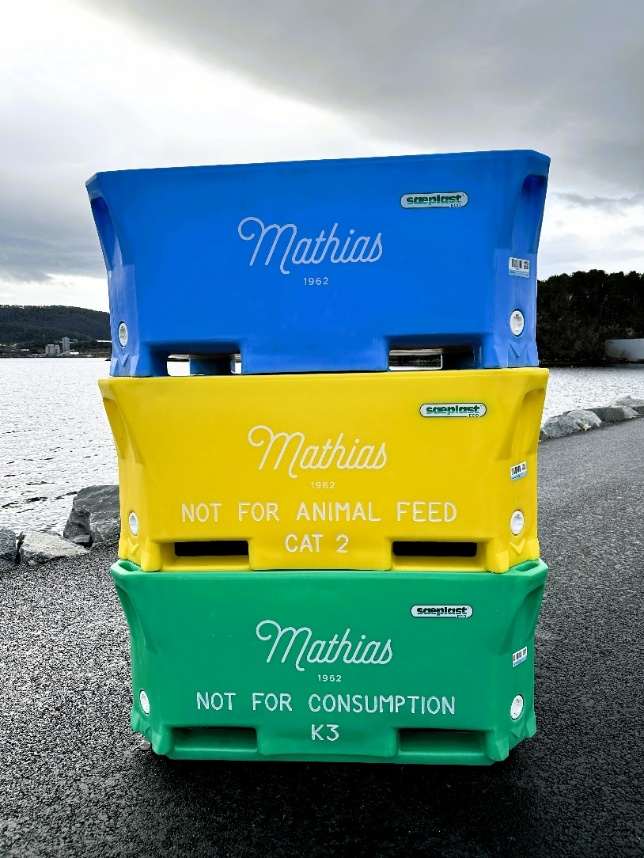
We Build for the Future – and the Equipment Must Match
Food processors around the world are under pressure to improve safety, reduce waste, streamline operations, and deliver consistent quality. Saeplast helps them do that with durable, hygienic, reusable material-handling solutions designed for the realities of food production.
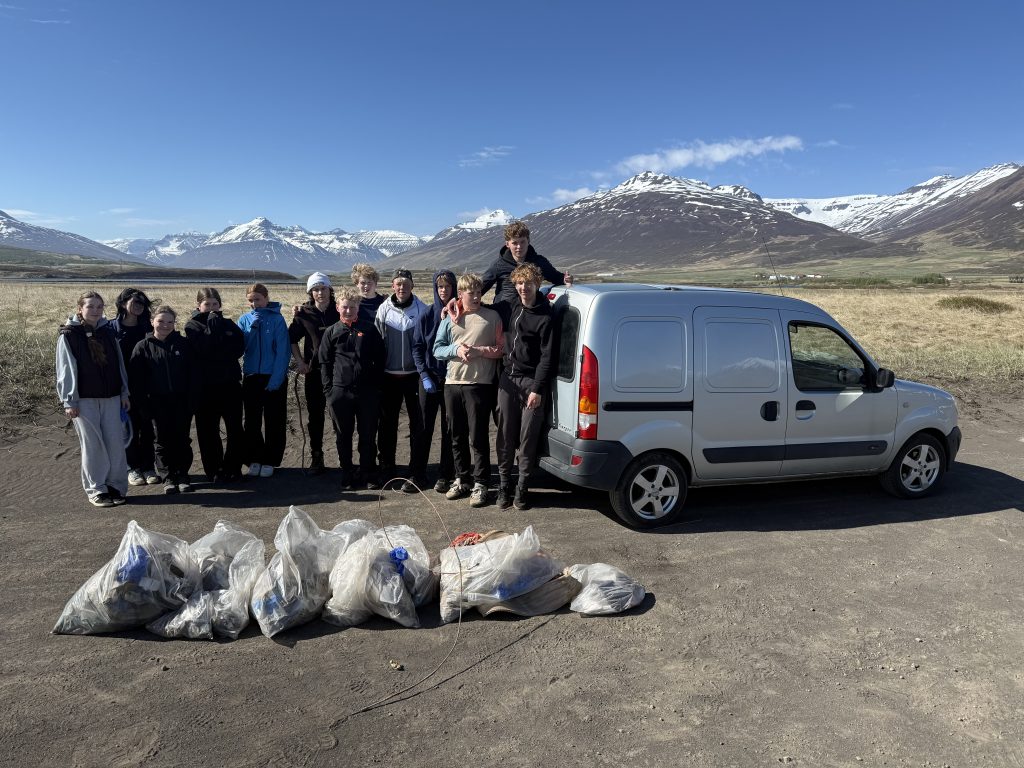
Coastal Cleaning 2026
Food processors around the world are under pressure to improve safety, reduce waste, streamline operations, and deliver consistent quality. Saeplast helps them do that with durable, hygienic, reusable material-handling solutions designed for the realities of food production.