



Sustainability Built Around Long-Term Use
Corporate Sustainability
Supporting More Circular Operations
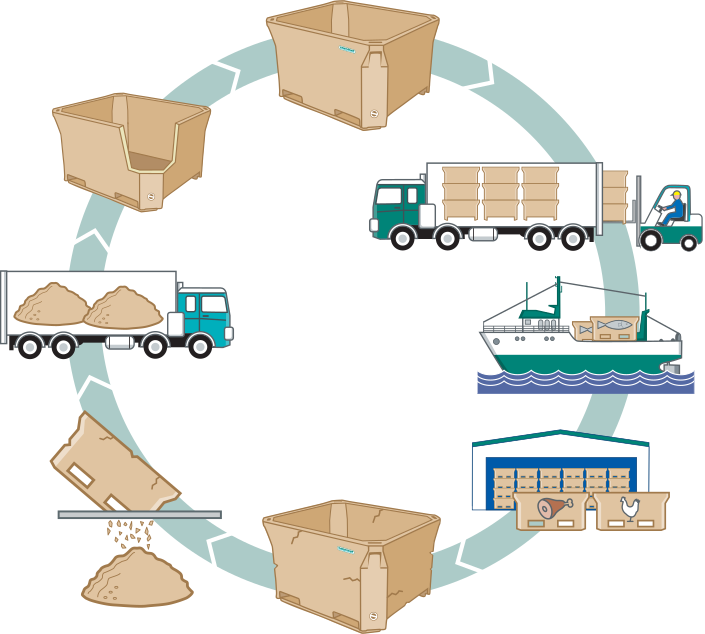
At Sæplast, sustainability starts with keeping products and materials in productive use for as long as practical.
Our containers are designed for repeated use in demanding industrial environments. Long service life, repairability and responsible end-of-life handling can help businesses reduce unnecessary replacement and make better use of the resources already in circulation.
Across our operations, we are also working to increase the use of renewable energy and incorporate recycled materials where technically and operationally appropriate.
For us, sustainability is not a single feature. It is about how a product is designed, manufactured, used, maintained and eventually handled at the end of its service life.
Product Sustainability
Designed for a More Circular Lifecycle
Recycling
Return-It
When a PE container reaches the end of its useful service life, recycling options are available in selected markets. Sæplast's Return-It* approach is designed to recover usable polyethylene and return valuable material to the production cycle where possible.
*Availability depends on location and product type.

Sustainable Resources
Incorporating Recycled Plastics
Saeplast utilizes post-consumer recycled (PCR) polyethylene in the production of its containers, reducing reliance on virgin plastic.

Manufacturing
Improving How We Produce
Sæplast continues to improve manufacturing efficiency and increase the use of renewable energy across its operations. These efforts form part of our wider approach to reducing resource use while maintaining the durability and performance required in demanding industrial environments.

Reusability
Built for Repeated Use
Saeplast containers are designed to last 6–10 times longer than single-use alternatives, reducing the need for frequent replacements. Unlike disposable packaging, Saeplast products are built for multiple life cycles, supporting sustainable resource management.
Product Lifecycle
Designed for Recycling
A circular approach depends on more than recyclability alone. Long service life, reuse, maintenance, repair and responsible end-of-life handling all contribute to keeping products and materials in use for longer.